Wollensak Model 5750 Vintage Reel to Reel Tape Recorder
Restoration/Rebuild
|
ClydeSight Tape Recorder Channel on YouTube!
ClydeSight Channel on YouTube features 84 videos for vintage tape recorder lovers. Some are about reel to reel machines, others are about vintage cassette tape recorders.
ALL feature a narrated walkthrough of the functions of each machine, voice and music tests, and an exploration of the inner workings of each machine that has been lovingly restored by ClydeSight.
Find information about YOUR favorite vintage tape recorder on ClydeSight Channel on YouTube Today! Click Here for ClydeSight Channel!
|
Help Us Help You!
Our YouTube Tape Recorder Restoration Videos are supported by sales of our products. Please take some time to click on the links at the top of this page and consider purchasing one of our fine products. Your purchase will benefit you AND you will help support our continuing work educating folks about vintage technology.
This section is written in neoclassical composer Tim Thompson's own words and tells the story of how he came to know the Wollensak 5750 reel to reel tape recorder back in 1967, and why he chose to restore a vintage tape recorder found on E-Bay in 2007 - 40 years later. This first page is his introduction and subsequent pages detail the inner workings of the Wollensak 5750 reel to reel tape recorder and what he did to restore/rebuild his vintage machine. It "reads" like the chapters in a book and links are at the top and bottom of each page.
Go to Speaker Restoration -->
How this:


became this!


My Introduction To The Wollensak 5000 Series
It was 1967 when I first saw a Wollensak 5000 series reel to reel tape recorder in an electronics catalog - and fell in love with it. The design jumped out at me and I found it aesthetically appealing. I also found the operating specifications (the "specs") to be good, well within range of the competing tape recorders of the day. I drooled over the catalog listing for the Wollensak 5800 - the top end of the 5000 design series - and lamented the fact that I didn't have the money for such a great tape recorder.
I was a in college at the time and of course, my money had to go for books and tuition and other college expenses, none of which included a Wollensak tape recorder. I did own a Sony mono reel to reel tape recorder that I had purchased, used, for $35 (at the time, a lot of money, or so it seemed) and it met my needs. It was a good, stable machine.
I had good reason to own a quality reel to reel tape recorder. I was a musicology and composition student at the college and I would often borrow recordings from the public library and record them for further study and musical analyses. Most of these recordings were in mono format anyway, so my Sony solution was a good one.
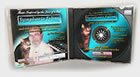
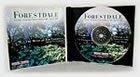
My success was such that later, I was graduated with Honors, due in some part to the records I was able to borrow and what I learned from listening to and analyzing them. And more, these recordings helped form the path of my musical life, from eventually becoming a pipe organ builder, to becoming a synthesizer composer and releasing two albums (Symphonia Felina and Forestdale) produced by ClydeSight Productions!
The library holdings introduced me to the vast world of classical music. I was always drawn to the romantic period, the music of Tchaikovsky and Rimsky-Korsakov, and owned several records, the Nutcracker, the Symphonies, Sherazade, The Easter Overture. But thanks to the public library, my musical taste expanded to modern composers, Milhaud, Stravinsky, Hovhaness, and different styles. It was from the library that I first learned my love of pipe organ music, when I discovered the Organ Concerti of Geroge Frederick Handel, and later the magnificent Organ Symphonies of Louis Vierne.
I had a wonderful college professor, Dr. Victor Mattfeld, a musicologist, who expanded my tastes even further to include the classicists, Haydn and Mozart, as well as music of the Middle Ages and Renaissance. He taught all periods of music, and actually started my love of synthesizers when he introduced me to the wonderful album "Switched on Bach" performed by Walter Carlos (who later became Wendy Carlos) on a Moog Synthesizer. He had made a reel to reel tape for me to study. I learned more about Bach from that recording that I imagined possible. It was something in the synthesizer voices that brought out the musical lines more clearly for me.
 I fell in love with that album (which I bought as soon as I had some money for it) and wished one day to be able to do something like Carlos had accomplished. 30 years later, I was composing synthesizer music of my own, this time on a MAC computer running QuickTime Musical Instruments, and I can claim my success - my Symphonia Felina was released on the Internet in 1997 and has remained there ever since!
But for me, 1967 was a happy time, filled with discovery and much hope for the future, and the public library was supporting it all with its vast record collection, which I was copying and learning from thanks to my Sony reel to reel tape recorder.
This machine was essential, as I could only borrow six records at a time, and only for a week, but my musical hunger demanded much more than that! So every day, I would borrow six records, rush home and listen to all of them and record some of them, then go back the next day to return them and borrow six more. I did this until I had amassed a large library of music for study.
Of course, all these tapes have disappeared long ago, and that reel to reel tape recorder was essential because many of the records I borrowed were out of print or of such unusual subject matter that the public library was the only place to get them!
Let's face it, a recording of the Tielmann Susato Dance Book (17th century courtly dances) is not number one on the hit parade, or was even carried by most record dealers in 1967! And imagine asking for a copy of the Fitzwilliam Virginal Book with a straight face! Until I was able to find these on record or cassette, I had my mono tapes to tide me over.
Eventually, I was able to purchase most of the recordings I had made from the public library. In fact, some I ordered from specialty record dealers, such as the Musical Heritage Society. It took years to get the record collection and replace the tapes, something I could never have done when I was in college. I still have them today and they were worth the search.
 The reel to reel tape recorder was more important than for just copying records. I was studying piano composition with Ms. Amelee Russel in New York. She was virtually blind and had perfect pitch. Every Saturday I would go to her studio for a lesson, and often I would bring a cassette (made on a Lloyd's cassette recorder) I had made from a reel to reel tape to ask her to help me understand the piano technique in the music. She had a Norelco machine (something I could not afford at the time) and of course, the two were compatible.
We also recorded my lessons on cassette (which I transferred to reel to reel once I got home) so I could learn and improve. I still have one of those reels, although the original cassette is long gone. She would say, "Learn to see with your ears. Let your ears tell you where the notes are," and would then go to the piano and play the passage we had listened to on the tape perfectly. These were wonderful lessons, and she was a great teacher.
Enter the Wollensak 5000 Series
Like many college students, I got some financial aid in the form of a work study grant. I was very lucky. I was hired by the music department of my college to make tape recordings for class use. The logic was simple. Dr. Mattfeld had an excellent record collection, and he taught classes all week long. If he had used his records to illustrate musical points, they would have worn out. By making reel to reel tapes not only could he play the music for his classes, he could also lend tapes to students for further study, if they had a reel to reel tape recorder. Then there were the Renaissance Band (I played Bass Recorder) and the Madrigal Society (I sang tenor) which had to be recorded (so we could hear just how awful we actually sounded!) I also made tape recordings to accompany my term papers and illustrate my music analyses.
The machines the college used were the Wollensak 5000 series - a couple of 5730's and a pair of 5750's!
I felt I was at the peak of my success now! Imagine, the very machines I was drooling over in catalogs were now at my disposal to use and enjoy, and I was getting paid for it! They made good recordings quite easily and I got to listen to a lot of very beautiful music.
I got to know each Wollensak reel to reel tape recorder very well. My job was fascinating and I not only learned to read orchestral scores, but the elements of studio production. Dr. Mattfeld would leave me a set of instructions:
Haydn String Quarter Op. 9, No 4. Fade up from measure 35 to 38, record through measure 76, fade out to measure 79, five seconds of silence, fade up measure 112 to 115, record through measure 160, fade out to measure 163...
I had find the score form his library (he had a huge number of "pocket scores") and get the machines set up, the record player (which had no pause control or indexing capability), set up the Wollensak, get a recording level (usually a setting of "3" was fine), set up the record buttons, start the record from the beginning of the quartet while following along in the score, hit the Start button at measure 35, fade up the volume controls, follow along to measure 76, fade down the volume controls, allow the machine to continue for 5 seconds (recording silence), hit the Stop button then immediately push the record buttons again, hit the Start button at measure 112, turn up the volume controls and record through measure 160, fade out and so on.
When the recording was made, Dr. Mattfeld would take it to class and start it at the appropriate time. He'd deliver his lecture, starting and stopping the machine, and his musical illustrations were all there, or supposed to be!
It took me quite a few tries before I got it right - my first tapes were something of a disaster. But Dr. Mattfeld was a patient man and helped me get the technique down. I learned so much from him and little realized I would use those skills later making recordings of my own music for the Internet! I never thanked him properly. Perhaps my music thanks him for me, at least in spirit.
All things must come to an end, and in 1969, I was graduated from the college with Honors in musicology. My adventures with the Wollensak were over. But I have a great nostalgia for these tape recorders, as well as the wonderful Professor Mattfeld and Ms. Russell - who I think I never thanked enough for all that they taught me.
I was heady on my success in college but facing something unpleasant - possible draft into the military because at the time, the war in Vietnam was still active. To "get a better deal" than being drafted, I joined the Army (it was a wise move - they were going to draft me anyway) and wound up in military service.
I never gave the Wollensak reel to reel tape recorder much more thought.
 I was shipped off to Vietnam, and there I had access to some of the finest Japanese audio equipment available at amazing prices (Sansui, Teac, etc.) Of course I took advantage of the opportunity and bought my stereo system while overseas and had it waiting for me upon my return. I still have the TEAC 4010SL reel to reel tape recorder I bought when I was in Vietnam. At the time it sold for $499 in the U.S. but I was able to get it for about $250 through the base PX. It still works perfectly. At one point the drive belt "melted" (as was often the case with composition rubber parts) but I was able to replace it. See the LINKS page for a TEAC source for parts.
With the high end audio equipment I now had, thoughts of a Wollensak tape recorder were far from my mind, and over the years, it simply faded into the dust of history.
Wollensak Discovery
E-Bay is probably the world's largest yard sale, and one television ad for E-Bay got my attention. It pointed out the nostalgic aspects of the auctions, how one can find toys and items one had as a child. This got me to thinking, and I rummaged around E-Bay, eventually hitting on "Vintage Tape Recorders."
I was amazed at the number of offerings, and even found that Lloyd's cassette recorder I had owned late in college, available. I have no need of such a machine, but I bought it anyway, for nostalgia's sake. It was an interesting "blast from the past". Of course, the machine was worn out and didn't work very well, although cosmetically, it was in excellent condition. This is about what one might expect from an E-Bay auction.
While this was all amusing, and I found a few old machines to purchase as collectibles, I received a fascinating opportunity E-Bay was presenting. It came to me in a dream.
I had fallen asleep in front of the TV, and a movie from the 1960's was showing (Turner classics). I woke up during the movie and felt a strange intuition. Something in the movie brought me back to thinking about my college days and my music teachers, a feeling of nostalgia. Then there was an ad for E-Bay - something about a lost blue toy boat being found there.
That night, I had a strange dream about a Wollensak 5800 -- the top of the line Wollensak made on the 5000 series design. I the dream, I found an old electronics catalog floating in a puddle in a rainstorm. I picked it up and it fell apart but I had one soggy page in my hand and could actually read it (which sometimes happens in dreams.) It showed the Wollensak 5800 - such a beautiful machine - but the price was crossed out and there was a type of notice in big blue letters over it, saying "Hurry, on sale now!"
 When I awoke, I felt a strong compulsion to search E-Bay. Here's the kicker. I found a Wollensak 5750 on sale as a "Buy It Now" item for only $10! My success with E-Bay auctions had been pretty good, but a "Buy It Now" item is a sure win, if you "Buy It Now." And this was something I could easily do!
The seller had posted no information about the machine other than "vintage reel to reel tape recorder" and a very bold "All Sales FINAL". This warned me that something might be amiss. I sent him an inquiry by E-Bay messenger and he replied curtly that "What you see is what you get - it's vintage. It has no power cord and cannot be tested." and would not tell me anything further about it. I almost decided to let it go, considering the poor salesmanship of the seller.
E-Bay items are often "hit or miss", and conditions are not always honestly provided by sellers. This seller was particularly uncommunicative, but I decided to get the machine anyway, something was compelling me to give it a chance. In fairness, the seller did ship the machine on time, which for $10, is about as much as one might expect. I expected that the seller was trying to "pull a fast one", based on the communication and the picture provided.
I could tell from the picture that something was wrong. The rewind lever was engaged, meaning whoever had the machine didn't know what it was for. It could have been stored that way for years (which I later discovered was most likely what happened). But that also meant it probably had not been used for quite some time, so the amplifier was probably still in working condition since these often blow out from abuse - playing too loudly for extended periods or mismatching the output to the wrong speakers, etc. I knew the characteristics of the machine from my college days, and I felt that even if it was a DOA (dead on arrival) I probably could get it into playable condition.
The Wollensak 5750 Arrives
 The picture the seller offered on E-Bay was cleverly taken. Although the machine appeared to be in good shape, the picture lacked visual detail about the condition of the wooden cabinet (especially the top) and the seller was careful not to photograph the ends of the speaker “wings”. As I discovered when the machine arrived, the wooden cabinet was heavily scratched and "dinged" with quite a few nicks, and the outer speaker grill cloth was stained, dirty and rotting. Worse, the speaker cabinets had fallen apart!
I checked the condition of the shipping box, but there was no evidence of damage by the shipper. The box was fine, and the machine had been well packed with bubble wrap. The speaker cabinets were probably already in pieces and rigged in the photo to give the impression of being whole and in tact.
I put the machine in my workroom and closed the door, wondering what I would do about this.
That night, I had another dream. I was back in time, building a pipe organ, working on the organ case. In the dream, someone said "You can fix this, look at it carefully, and you'll see the key." (of course all pipe organs have "keys")
When I was an apprentice pipe organ builder, I had learned cabinetry. The next day, I carefully examined the speaker cabinets and found only the glue joints had failed (indicating the machine had not been cared for at all for quite some time.) I was able to rebuild them, and this gave me inspiration to continue working with the machine. I had gotten the speaker cabinets back together at least. It was a start of a grand adventure.
Fortunately, the cosmetic condition of the main face plates of the tape recorder were in almost pristine condition, probably protected by the speaker cabinets until they fell apart. Not so the mechanical parts. The inside working parts of the machine were in sad shape, covered in dust and old sticky grease. I wasn't surprised by this, I had expected as much.
Once again, my success with the Wollensak 5750s I knew in 1967 came to the rescue, and this brings us to the wonderful story of my restoration/rebuild process.
This vintage reel to reel tape recorder I bought on E-Bay has brought me hours of pleasure, both tinkering pleasure in the restoration, and listening pleasure in the musical results.
The machine has fascinating mechanics as I will explain in the next pages, so follow along and learn with me the secret inner workings of the Wollensak 5750 reel to reel tape recorder!
Go to Speaker Restoration -->
Please DO NOT ASK US how to sell your old machine or tapes or records. We will NOT respond to selling or value estimate inquiries.
 Visit clydesight.com Master Site
Web site copyright ©ClydeSight Productions - 2007